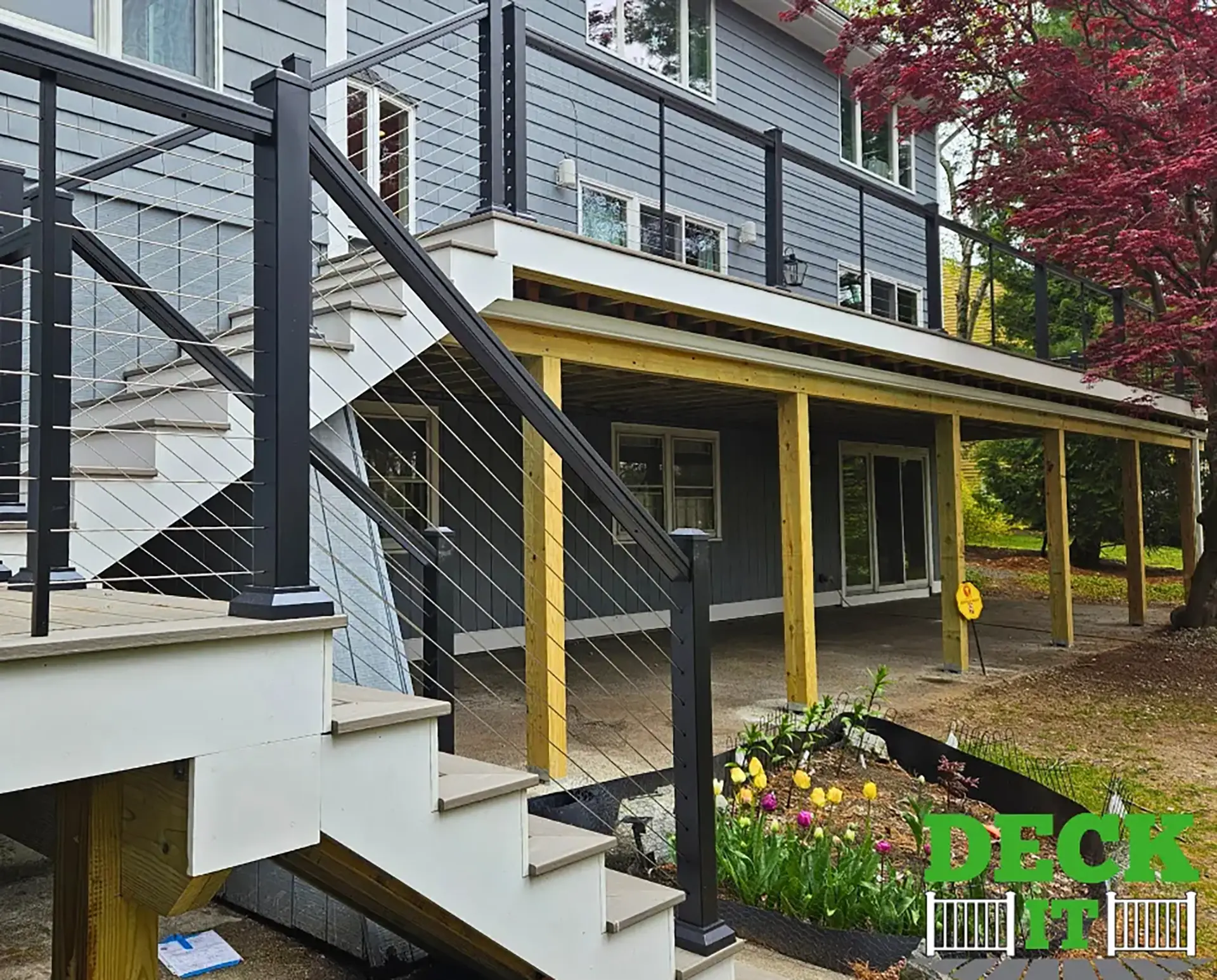
Most homeowners think about what their deck looks like from above. The space underneath rarely gets any attention until a heavy rain soaks everything beneath it, leaves the framing sitting in moisture for weeks, and turns what could have been usable square footage into a muddy, neglected corner of the yard. An underdeck drainage system changes that equation entirely, and for homes across Marlborough and Central MA, it’s one of the most practical upgrades a second-story deck can receive.
What an Underdeck Drainage System Actually Does
Rain hits your deck boards and, on a standard deck, drips straight through the gaps between boards and onto whatever sits below. That means wet framing, soggy furniture, unusable ground-level space, and over time, the kind of moisture damage that shortens the life of your deck structure.
An underdeck drainage system intercepts water before it reaches any of that. The system sits above the joists, using a network of troughs and downspouts to catch water as it moves through the decking and redirect it to the outer edges of the deck. From there, it drains away cleanly through a gutter and downspout setup that keeps everything dry. The area beneath your deck stays protected from rain, even during a serious New England storm.
The key distinction worth understanding is above-joist versus below-joist installation. Above-joist systems, like Trex RainEscape, install before your decking boards go on, which means water never touches the framing at all. That protects the structural integrity of your deck far more effectively than a below-joist system, which catches water after it has already passed through and made contact with the wood. For new deck builds in New England, MA, above-joist installation is almost always the better long-term choice.
What the Space Below Becomes
Once you add an underdeck drainage system, the ground-level area beneath your deck becomes genuinely usable outdoor space. Homeowners across Marlborough and Central MA use it for covered patio seating, outdoor dining, storage for lawn equipment and bikes, or a protected zone for a grill or outdoor kitchen setup. Because the system keeps the area dry, you can also add ceiling lighting, ceiling fans, or entertainment systems to the space without worrying about moisture exposure.
This is one of the biggest reasons homeowners invest in underdeck drainage beyond simple waterproofing. You are effectively doubling your usable outdoor square footage without adding any new structure to your property. For homes where deck space is at a premium, that matters.
Why New England Weather Makes This Especially Important
New England homeowners deal with a level of weather variation that puts real stress on outdoor structures. Heavy spring rains, summer humidity, and then freeze-thaw cycles through winter all work against unprotected framing. When water gets into joists and beams repeatedly across multiple seasons, rot and mold follow, and the structural repair costs that come with that damage are significant.
An underdeck drainage system eliminates most of that moisture exposure at the source. Dry framing lasts longer, holds fasteners better, and resists the mold and decay that New England, MA winters tend to accelerate. For any elevated deck in Central MA, treating drainage as part of the original build rather than a later retrofit is almost always the smarter financial decision.
Installation on New Builds vs Existing Decks
If you’re building a new deck, adding an underdeck drainage system during construction is straightforward and significantly less expensive than retrofitting later. The troughs and downspouts install over the joists before decking boards go down, and the entire system gets integrated cleanly into the build.
For existing decks, the process is more involved. Above-joist systems require removing the decking boards to install properly, while below-joist systems can be added without disturbing the deck surface. The right approach depends on the age of your deck, its current condition, and your goals for the space beneath it.
What to Expect From a Professional Installation
A professionally installed underdeck drainage system should be watertight, properly sloped for drainage, and built to handle the rainfall volumes common in New England, MA. The gutter and downspout connection matters as much as the trough system itself. Without a proper outlet for collected water, the system backs up and defeats its own purpose.
Every installation should be handled by a licensed and insured team with real experience in deck construction, not a general contractor treating drainage as an afterthought.
If your deck has unused space below it, or you’re planning a new build and want to do it right from the start, an underdeck drainage system is worth including in the conversation. Reach out to Deck It at 978-264-8050 for a free consultation and let’s talk through what makes sense for your home.