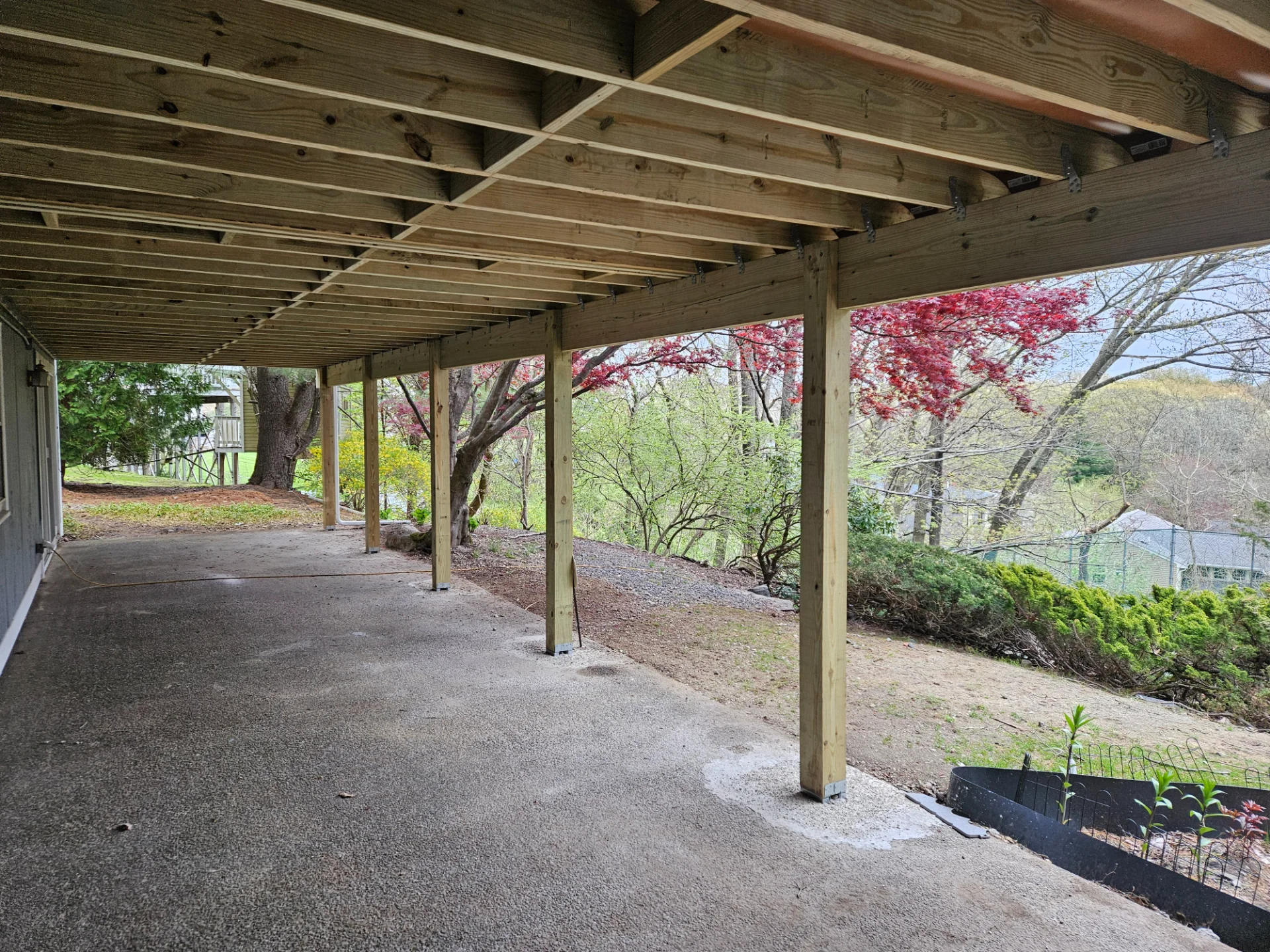
A deck looks finished from the top, but its real strength lives underneath. In Framingham, where cold winters and a deep frost line put pressure on every outdoor structure, deck framing decides whether a deck stands strong or starts to fail. Here are the questions homeowners ask most about it, answered plainly.
What Exactly Is Deck Framing?
Deck framing is the structural skeleton beneath the surface boards. It includes the footings, posts, beams, and joists that carry the weight of the deck and everyone who steps onto it.
Think of it as the part of the deck you never see but rely on every day. The boards, the railing, and the stairs all sit on top of this frame, so its strength sets the limit for the whole structure.
Why Does Deck Framing Matter So Much In Framingham, MA?
Framingham sits in a climate that challenges any deck. Long winters, heavy snow, and ground that freezes deep all push against the structure, and the frame is what holds firm against them.
A frame built for these conditions keeps the deck level and stable for decades. A weak or shortcut frame, on the other hand, leads to sagging, shifting, and movement that no surface board can hide.
How Do Massachusetts Winters Affect A Deck Frame?
The freeze-thaw cycle is the main culprit. When moisture in the ground freezes it expands, and that force can lift a deck that was not anchored deep enough, a problem known as frost heave.
Good framing answers this with footings set below the frost line and beams sized to carry a winter’s worth of snow. When the frame accounts for both, the deck rides out the season without budging.
What Materials Go Into A Strong Deck Frame?
The framing material shapes how the structure performs and how long it lasts. A skilled builder matches the material to the deck and the local conditions.
- Pressure-treated wood and LVL as strong, rot-resistant framing built for the load
- Aluminum framing for corrosion resistance and a long service life
- Composite framing options for durability with minimal upkeep
Brands like ProWood, TimberTech Aluminum, and Owens Corning give that framing proven, reliable performance.
What Happens When Deck Framing Is Done Poorly?
Poor framing rarely shows itself right away, which is what makes it dangerous. Over a season or two, undersized members and shallow footings start to reveal themselves through bounce, sag, and a deck that feels less solid.
Left unaddressed, those weaknesses can turn into a real safety risk. Strong deck framing from the start avoids all of it and protects everyone who uses the deck.
How Do Footings Fit Into The Framing?
Footings tie the frame to solid ground, and in Massachusetts they have to reach well below the surface. Setting them past the frost line stops the freeze-thaw cycle from heaving the deck over winter.
A builder may use traditional concrete footings or helical piers depending on the site and soil. Either way, the goal is the same, a stable base that keeps the deck level and the framing sound for years.
Should You Leave Deck Framing To A Professional?
Yes, and the reasons are practical. Deck framing involves structural loads, local codes, and Framingham’s specific climate, and a professional handles all three with experience rather than guesswork.
Professional work also clears the formal hurdles. Pulling permits, building to code, and passing inspection come standard, giving you a deck that is safe, durable, and built on a frame you can trust.
Deck It Offers Expert Deck Framing For Homes In Framingham, MA
Deck It builds strong, code-compliant deck framing for homeowners in Framingham, MA, using wood, aluminum, or composite materials anchored on footings built for New England winters. If you want a deck built on a frame that lasts, reach out to talk through your project. Call (978) 264-8050 to get started.