Choosing condo decking starts with your building’s rules, the condition of the existing structure, and how you want to use the space. Composite and PVC boards are options to discuss, but the right choice is one your association will accept and the deck can support.
Start With Your Association’s Requirements
The space you use and the parts of the property you can change may not be the same. Ask your board or property manager for the current rules, the approval process, and who can authorize the work. Before agreeing to a project, find out whether the deck is your responsibility, the association’s, or shared.
Your community may ask that a replacement match neighboring decks in color, railing style, or size. Find out whether the board wants drawings, samples, insurance information, or a contractor proposal. Get decisions in writing and agree on who will submit each item. Association approval is separate from any town approval.
Check the Existing Structure Before Choosing Boards
New boards cannot fix a problem in the framing underneath. An assessment should consider the framing, connections, railing attachment, and visible signs of moisture damage. When a deck connects to the building or sits over a waterproof surface, the project needs to account for those components too.
If the support structure is suitable for the proposed work, resurfacing may be an option. If it is deteriorated or cannot accommodate the design, repair or replacement may be necessary. Appearance alone cannot settle that decision. For a balcony or shared building element, check with the association about who can authorize an assessment and any changes.
Compare Condo Decking Materials and Colors
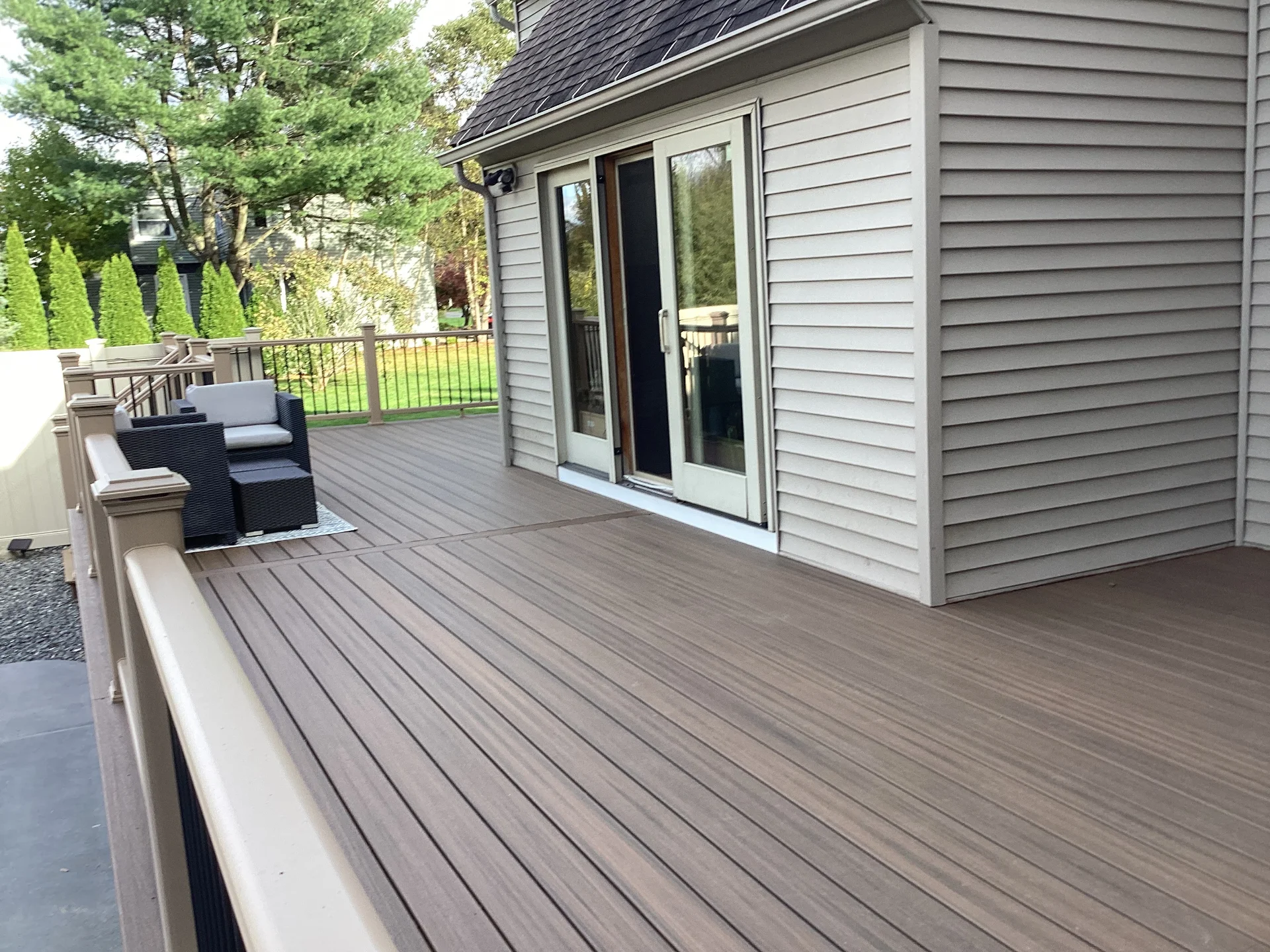
Composite and PVC boards come in different colors, textures, and product lines. Bring samples to the property and look at them next to the siding, trim, and neighboring decks in natural light. A color that looks right on its own can look different against the building.
Both options still need care. Ask for the selected product’s cleaning and snow-removal instructions rather than assuming every board can be treated the same way. Trex’s care and cleaning guide is one manufacturer resource; follow the guidance for the product you ultimately select. Check that the boards, railing, fasteners, and accessories fit the project and the association’s requirements.
Consider Everyday Use and Shared Spaces
Measure the usable area with the door open and furniture in place. A table may fit on a plan but leave little room to walk around it. Think about how many people typically use the space, where chairs will go, and how you will keep the route to the door clear.
Look beyond the deck surface, too. Consider how the railing affects the view, whether stairs are part of the work, and how water moves around the deck and adjoining building. A suitable design depends on the actual building and its drainage, not a standard detail copied from another balcony.
Confirm Local Requirements Before Work Begins
For a property in Burlington, check with the town’s Building Department about your proposed work and the permits or other approvals it requires. The town’s permits and applications page explains that requirements depend on the project and that non-single-family projects may involve Planning Board review. Association permission does not replace a required town permit.
Ask the contractor and association who will prepare and submit each required item, and wait for the appropriate approvals before work begins. Also discuss access, working hours, deliveries, and protection of common areas with the property manager.
Compare Proposals on the Same Scope
A useful proposal spells out what will be removed, which components will be assessed or replaced, and which boards and railings are included. It should explain how unexpected conditions discovered during the work will be addressed and distinguish the contractor’s scope from work assigned to the association or someone else.
Compare those details before comparing the total. A lower price may describe a different project if one proposal includes framing or disposal and another does not. Resolve open questions about responsibilities before signing.
Discuss Your Condo Deck Project With Deck It
Deck It offers condo deck design and installation. If you are considering condo decking in Burlington, call (978) 971-4455 to discuss your property, your association’s requirements, and the work you have in mind, and request a free consultation.